








House Your EHS Management System on One Platform
One system means one source of truth. Act faster, stay compliant, and drive measurable improvements in safety and sustainability across your entire operation.
Trusted by Leading Organizations Around the World




What are the 3 areas of focus for an EHS Management System?
An Environmental Health and Safety Management System focuses on promoting worker health by preventing illness and injury, ensuring safety through hazard identification and training and protecting the environment by reducing pollution.

Environment
Control environmental impacts by sourcing clean energy, cutting energy costs and reducing risks like spills and leaks.

Health
Support worker health by preventing illness, injury and chronic disability while ensuring productive operations.

Safety
Manage your work processes to identify safety hazards and prevent workplace incidents, accidents, illnesses and injuries.
Key Features of Intelex EHS Software
Dedicated companies choose Intelex to drive continuous improvements in their programs.

Reports and Dashboards
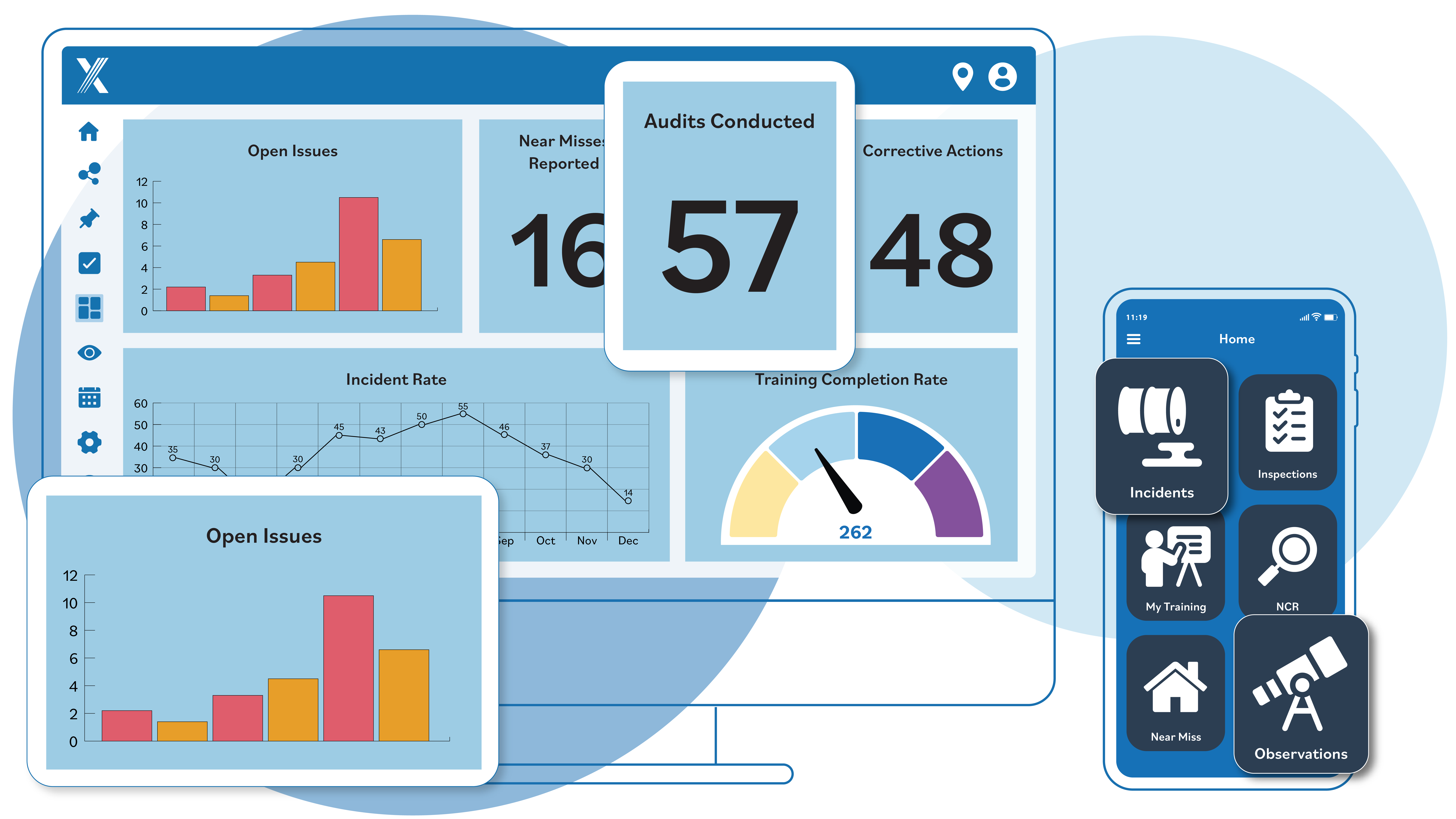
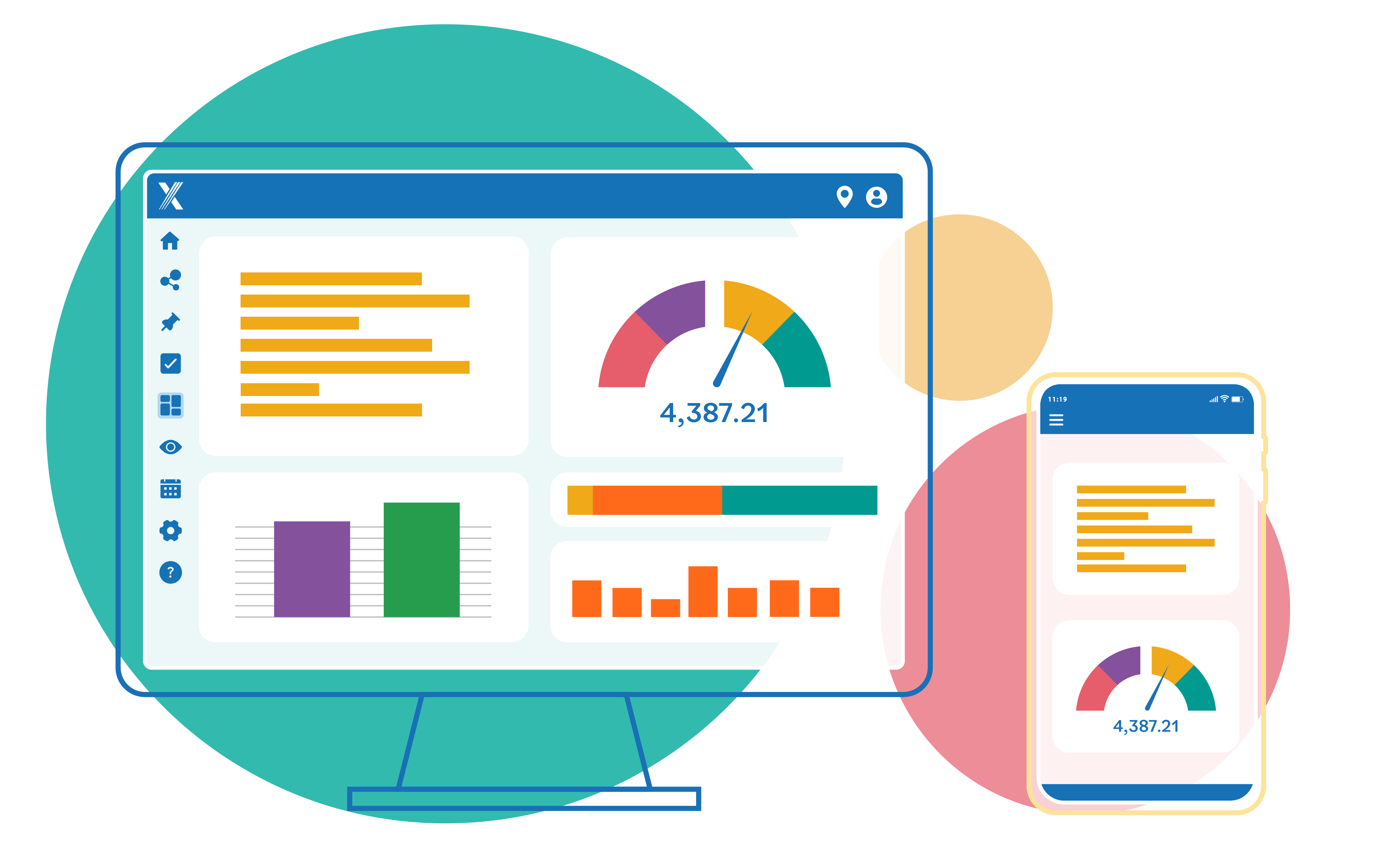
EHS reports and dashboards provide real-time data, helping you track performance and make informed decisions.

Mobile App
EHS mobile apps give you access to critical safety data on the go, enabling quick reporting and real-time updates.

Incident Management
Incident management allows you to log, track and investigate workplace incidents to prevent future occurrences.

Observation Management
Observation management features robust checklists and intelligent workflows to escalate high-risk situations instantly.

Audit Management
Audit management streamlines the audit process, helping you track, organize and ensure compliance with standards.

Training Management
Training management helps track and deliver essential safety training, ensuring compliance and reducing workplace risks.
Boost Safety and Compliance with EHS Management Software
EHS software simplifies compliance for supervisors and empowers frontline workers with tools for safety and reporting.
- Streamlines compliance processes, reducing manual administrative tasks.
- Provides real-time data for better decision-making and risk management.
- Tracks incidents and audits, ensuring timely resolution and follow-up.
- Enhances safety training, improving workplace health and safety outcomes.
- Empowers workers to report observations and prevent potential risks.
- Simplifies incident reporting with easy-to-use mobile tools.
- Provides quick access to safety procedures and training resources.
- Improves communication on hazards and real-time safety updates.
EHS Management System Demo Playlist
The Intelex EHS Management System demo playlist provides an in-depth overview of the software's features and functionalities, showcasing how it can streamline compliance, incident management and reporting processes.

But Don't Take Our Word For It
Frequently Asked Questions
EHS management is the structured process organizations use to identify, assess, and control risks related to environmental impact, worker health, and workplace safety. It involves establishing policies, procedures, and programs that ensure a company meets legal obligations while protecting its people and the environment. An effective EHS management system is key to reaching your organizational environmental, health, and safety objectives.
A well-designed management system helps establish objectives and promotes continuous improvement and performance measures. It enhances communication and coordination across the organization. It also promotes adaptability to changing circumstances and proactive responses to challenges.
EHS stands for Environmental, Health and Safety. It refers to the practices, regulations and systems designed to ensure the protection of the environment, worker health and workplace safety. EHS programs help organizations comply with regulations, reduce risks and create safer, more sustainable operations.
EHS (Environmental, Health and Safety) and HSE (Health, Safety and Environment) refer to the same principles but in different word order. HSE is more commonly used in the UK, while EHS is prevalent in the US. Both focus on workplace safety, protecting worker health and minimizing environmental impact.
Several globally recognized standards provide the framework for how organizations structure and implement their EHS management systems:
- ISO 14001 for Environmental Management: The world's most widely adopted environmental management standard. It provides a framework for organizations to manage environmental responsibilities, reduce their ecological footprint, and demonstrate compliance with environmental regulations.
- ISO 45001 for Occupational Health & Safety: An international standard for establishing and maintaining efficient workplace health and safety management systems. It replaced OHSAS 18001 and focuses on proactively preventing work-related injury and illness by identifying and controlling hazards before they cause harm.
- ANSI Z10 for Occupational Health & Safety: A voluntary consensus standard designed specifically for the United States. Covers various occupational health and safety aspects, including policy development, planning, implementation, evaluation, corrective actions, and management review.
- Regional & Industry-Specific Standards Beyond ISO frameworks, many industries follow additional standards such as OSHA regulations (US), REACH and EU-OSHA directives (Europe), or sector-specific guidelines in industries like oil and gas, mining, and manufacturing.
ISO 45001 defines the scope of an EHS management system as creating a safe, healthy work environment by identifying, mitigating and eliminating workplace risks that could harm workers’ well-being.
It covers:
- Context of the Organization: Understand the internal and external factors affecting health and safety.
- Leadership: Ensure top management commitment to the EHS system.
- Planning: Assess risks and opportunities, setting clear objectives and processes.
- Support: Provide the necessary resources, training and communication to sustain the system.
- Operation: Implement the plans to achieve safety and health goals.
- Performance Evaluation: Measure and evaluate EHS performance for ongoing improvement.
- Improvement: Identify and act on opportunities to improve EHS performance.
The scope and maturity of an EHS management system vary by industry, region, and company size. Highly regulated sectors or countries often require more advanced systems, but across the board, certain core components are essential:
- Policy & Objective Setting: Defines clear EHS policies and goals aligned with company values.
- Incident Reporting: Captures, tracks, investigates and reports incidents and near-misses, including injurie and property damage.
- Audit Management: Schedules, tracks, and reports internal and external audits, ensuring compliance across locations and jurisdictions.
- Document Control: Manages documents throughout their lifecycle, controls access to sensitive files, reduces errors and improves visibility.
- Training Management: Plans and tracks EHS training for a global workforce, helping build a strong safety culture and staying updated on regulations.
- Regulatory Compliance: Adheres to EHS regulations and proves compliance through inspections and audits, collecting and analyzing data to meet industry standards.
EHS management system software helps organizations manage environmental, health and safety processes. It collects and stores data in one central place, making it easier to track incidents, illnesses and safety risks. The software simplifies the preparation of documents for audits and inspections and helps identify the root causes of incidents. With this information, you can create Corrective and Preventive Action (CAPA) plans to prevent future problems, ensuring a safer, more compliant workplace.
EHS software helps you create, manage and improve your organization’s safety system. It saves time and money by keeping employees safe, reducing risks and making compliance with regulations easier. With real-time reporting, everyone stays informed, from leadership to workers. EHS software also improves overall safety performance, helping to keep your employees healthy, happy and safe.
Yes, modern EHS software significantly improves how organizations manage environment, health, and safety programs. It centralizes data into a single accessible platform, eliminating silos and giving teams real-time visibility into risks, compliance, and performance. Automation streamlines routine tasks like incident tracking and audit scheduling. Mobile tools empower employees to report issues or complete checklists from the field, improving response times and data quality. Advanced dashboards and analytics provide leadership clarity on leading and lagging indicators, enabling proactive decision-making. Learn more about Intelex’s configurable EHS software.
Leading and lagging indicators are complementary metrics used in EHS management to measure safety performance and drive continuous improvement.
Lagging Indicators: Reactive, backward-looking metrics that measure outcomes after an event occurs. They show what happened but don't help prevent future incidents. Common examples include:
- Total Recordable Incident Rate (TRIR)
- Lost Time Injury Frequency Rate (LTIFR)
- Number of fatalities or serious injuries
- Workers' compensation costs
- Environmental spills or violations reported
- Lagging indicators are useful for benchmarking and regulatory reporting, but relying on them alone means measuring failure after the fact.
Leading Indicators: Proactive, forward-looking metrics that measure the activities and behaviors designed to prevent incidents before they happen. Common examples include:
- Safety inspections and audits completed
- Near-miss reports submitted
- Corrective actions closed on time
- Employee safety training completion rates
- Hazard observations reported
- Leading indicators enable organizations to identify risk trends and intervene early, making them a more powerful tool for improving safety culture and performance.
Expand your EHS management knowledge
with these featured resources

ON-DEMAND WEBINAR


EHS Management Software System Demo
This nine-minute product demo highlights some of the core EHS software applications and functionality Intelex has to offer. Watch and get a feel for our system’s usability and breadth of features that support managing and streamlining key elements of your organization’s EHS program. Watch in real-time how Intelex’s EHS software solutions will allow your organization to:
- Record and manage EHS incidents from both a desktop or mobile device.
- Create, schedule, and perform any type of audit.
- Build and distribute two-way communication ‘bulletins’ to your employee base.
- Easily configure reports that help you discover trends, isolate hotspots, and communicate progress on mitigation.
